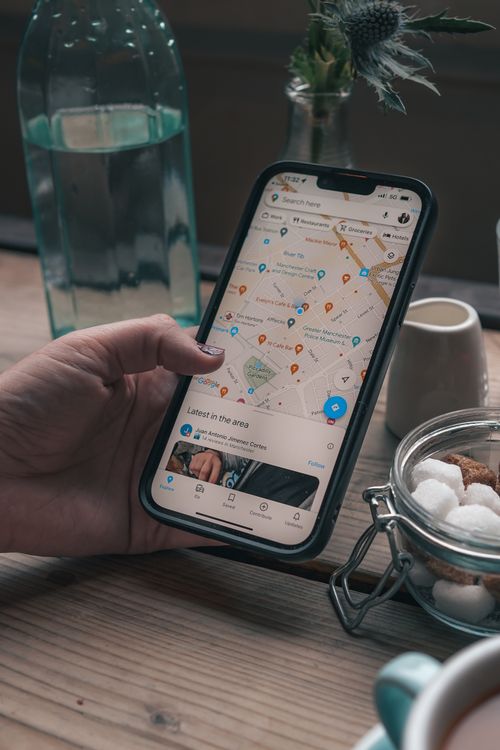
When someone in your city searches for what you sell, Google decides in a fraction of a second which businesses to show. If yours isn't among them, that customer goes elsewhere — usually to a competitor who simply did a better job of being findable.
This isn't about luck or ad budgets. It's about local SEO: the set of signals Google uses to match local searches with local businesses. Here's how it works, and what you can do about it.
How Google Chooses Who Shows Up
Google weighs three main factors for local results.
Relevance. Does your business match what the person searched? Google reads your business profile, your website content, and the categories you've chosen to figure this out.
Distance. How close is your business to the searcher? You can't change your address, but you can make sure your service area is defined correctly.
Prominence. How well-known and trusted is your business online? Reviews, links from other sites, and mentions across the web all feed this signal.
You can't control distance. Relevance and prominence, though, are entirely in your hands.
The Four Foundations of Being Found
1. Your Google Business Profile
This is the single most important asset for local visibility, and it's free. Claim it, choose the right primary category — this matters more than most people realize — write a clear description of what you do, list your services, and upload real photos of your work, your team, and your location. Complete profiles get found more often. It's that straightforward.
2. Consistent business information
Your business name, address, and phone number should be identical everywhere they appear online: your website, your Google profile, directories, social media. Even small inconsistencies confuse Google and weaken your rankings.
3. Reviews
Reviews are both a ranking signal and a conversion signal. Google favors businesses with a steady stream of recent, positive reviews, and so do customers. Ask satisfied customers for reviews as a habit, and respond to every review you receive — including the negative ones. A calm, professional response to a bad review often impresses future customers more than the review itself worried them.
4. A website Google can read
Your website should state clearly what you do, where you do it, and who it's for — in text Google can crawl, not just inside images. A dedicated page for each main service, with your city or service area mentioned naturally, gives Google exactly what it needs to match you with local searches.
How Long Until You See Results
Local SEO compounds. Profile completions and review requests can move the needle within weeks; competitive rankings for valuable searches typically take three to six months of consistent effort. That's not a reason to wait — it's the reason to start now. Every month you delay is a month your competitors build prominence you'll have to catch up with.
What to Do This Week
Start with the highest-leverage actions: claim and complete your Google Business Profile, fix inconsistent listings, and ask your five happiest customers for reviews. These three moves alone put most small businesses ahead of their local competition, because most local businesses haven't done any of them.
Local SEO isn't a one-time project. It's maintenance. But the businesses that treat it as a habit are the ones that show up when it counts.
Get Your Free Visibility Audit
Want to know exactly where your business stands on Google right now? Schneider Solutions offers a free visibility audit: we check your Google presence, your website, and your reviews, and show you — honestly and specifically — what's holding you back. Email ana@schneidersolutionsusa.com to request yours.